
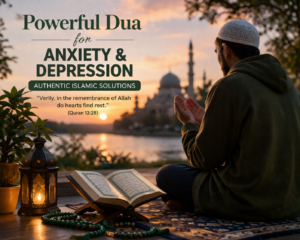
Introduction:
When the Heart Feels Heavy
There are moments in life when everything feels overwhelming. Your chest tightens, your thoughts race, and even the smallest tasks feel impossible. Anxiety and depression are not just modern struggles, they are deeply human experiences that people have faced throughout history.
But as a Muslim, you are never alone in your pain.
Allah understands every silent tear, every restless night, and every hidden fear in your heart. And through Islam, He has provided powerful spiritual tools to help you find peace again—starting with dua (supplication).
If you are struggling right now, this article is for you.
What Islam Says About Anxiety and Depression
Islam does not ignore mental health. In fact, it acknowledges emotional struggles in a deeply compassionate way.
Even the Prophets who were the best of mankind, experienced sadness, stress, and hardship. One of the most powerful examples is the “Year of Sorrow,” when the Prophet Muhammad (peace be upon him) lost both his beloved wife Khadijah and his uncle Abu Talib. He felt deep grief, yet he turned to Allah for comfort.
This teaches us something important:
- Feeling anxious or depressed does NOT mean you have weak faith.
- It means you are human and Allah wants you to turn back to Him.
- Why You Feel This Way (And Why It’s Okay)
Before we go into the duas, let’s be honest about what you might be feeling:
- Constant worry about the future
- Overthinking everything
- Feeling empty or unmotivated
- Losing interest in things you once loved
- Difficulty sleeping or constant fatigue
These feelings can come from stress, life challenges, loss, or even internal struggles you cannot explain. Islam doesn’t tell you to “just ignore it.” Instead, it gives you a way to heal both your heart and mind together.
Powerful Duas for Anxiety and Depression
Here are some authentic, powerful duas from the Sunnah that bring relief, calmness, and hope.
1.Dua for Anxiety, Grief, and Distress
Arabic:
اللّهُـمَّ إِنِّي أَعُوذُ بِكَ مِنَ الْهَمِّ وَالْحَزَنِ
Transliteration:
Allahumma inni a‘udhu bika minal-hammi wal-hazan
Meaning:
“O Allah, I seek refuge in You from anxiety and sorrow.”
This is one of the most powerful duas taught by the Prophet (SAW).
Repeat it daily, especially when your thoughts feel overwhelming.
2. Dua of Prophet Yunus (For Deep Distress)
Arabic:
لَا إِلَهَ إِلَّا أَنتَ سُبْحَانَكَ إِنِّي كُنتُ مِنَ الظَّالِمِينَ
Transliteration:
La ilaha illa anta, subhanaka inni kuntu minaz-zalimin
Meaning:
“There is no deity except You; You are perfect. Indeed, I have been among the wrongdoers.”
This dua was made in darkness inside the belly of a whale.
If Allah answered him, He can answer you too.
Dua for Relief from Stress and Debt
Arabic:
اللهم اكفني بحلالك عن حرامك وأغنني بفضلك عمن سواك
Meaning:
“O Allah, make what is lawful enough for me, and make me independent of others by Your grace.”
Financial stress is a major cause of anxiety this dua helps bring barakah and relief.
4. Short Daily Dhikr for Peace
SubhanAllah (33x)
Alhamdulillah (33x)
Allahu Akbar (34x)
This simple practice calms the heart and reduces mental stress significantly.
How These Duas Actually Help (Spiritual + Psychological Benefits)
You might wonder, how does making dua reduce anxiety?
Here’s the truth:
- It Releases Emotional Burden
When you talk to Allah, you’re not bottling things up anymore.
- It Builds Inner Hope
Dua reminds you that your situation is not permanent.
- It Creates Mental Calmness
Repetition of dhikr slows down racing thoughts (similar to mindfulness).
- It Strengthens Tawakkul (Trust in Allah)
You stop trying to control everything and start relying on Allah.
Practical Islamic Steps to Overcome Anxiety
Dua alone is powerful, but combining it with action brings faster healing.
- Protect Your Salah
Prayer is your daily reset. Never underestimate its power.
- Limit Overthinking Triggers
Reduce social media, negative environments, and toxic conversations.
- Keep Good Company
Surround yourself with people who remind you of Allah.
- Maintain a Daily Routine
Structure reduces anxiety more than you think.
- Seek Professional Help if Needed
Islam encourages seeking treatment. Therapy is not against faith.
Real Experience: Finding Peace Through Dua
Many people who have anxiety have found relief not overnight, but gradually through consistency.
At first, it may feel like nothing is changing.
But slowly:
- Your heart becomes lighter
- Your thoughts become clearer
- Your hope starts to return
This is how healing works in Islam, step by step, with patience (Sabr).
Important Reminder
If your depression feels severe or includes harmful thoughts:
Please speak to a trusted person or a professional immediately.
Islam values your life. Seeking help is a sign of strength, not weakness.
Final Thoughts: Your Healing Begins Today
No matter how heavy your heart feels right now, remember this:
- Allah has NOT abandoned you
- Your pain has a purpose
- Relief is closer than you think
Start small:
- Make one dua today
- Pray one sincere prayer
- Take one step toward healing
- And trust that Allah is listening, every single time.
Frequently Asked Questions (FAQs)
Can dua really help with anxiety and depression?
Yes, dua can be a powerful source of relief for anxiety and depression. In Islam, turning to Allah through supplication helps ease emotional pain, bring inner peace, and strengthen hope. While dua may not remove problems instantly, it gradually calms the heart and builds resilience. For best results, combine dua with consistent prayer (Salah), remembrance (dhikr), and practical steps like seeking support or professional help if needed.
How often should I recite these duas for mental peace?
There is no strict limit, but consistency is key. You can recite these duas daily, especially after Salah, before النوم, or during moments of stress. Even repeating a short dua like “Allahumma inni a‘udhu bika minal-hammi wal-hazan” multiple times a day can bring noticeable calmness over time. The more sincere and consistent you are, the more impact it will have on your heart.
Is it okay to seek therapy while relying on dua?
Yes, absolutely. Seeking therapy or medical help is completely allowed in Islam. The Prophet (peace be upon him) encouraged seeking treatment for illnesses. Mental health conditions like anxiety and depression can require both spiritual and professional support. Using dua alongside therapy is not a contradiction, it is a balanced and recommended approach to healing.
About The Author
